Thursday, 20 October 2011

Smoking in the 2nd Class

Hello my faithful readers,

This is the 'appetizer' for our next post: modern visual poetry.
Feel free to enjoy this 'sumptuous' spread of literary devices and revel in its definition-defying or rather the re-defining of the free form.

To view the poem, open it in a new tab and click on the image to enlarge. 

Mapping the City

The city is the place we live: we weave our lives and experiences around it and it precisely this that makes writing about the city so powerful. Whether in prose (narrative) or verse (poetry), when witing about the city, the writer is able to imbue the city with the values and emotions the want to ascribe it. When mapping a city, you can garb it as majestic, fantastical, unfamiliar, evil, barren, lifeless, rich, poor, tyrannical et cetera.

When mapping a city, it is useful to 'personalise' the city by language (by use of jargon), diction (choice of words), imagery, metaphor or metonymy and not to forget - memory. Memory is a very powerful tool, not only in writing but in any field. The way we perceive things historically, temporally (time) and spatially (space) can alter the ways we perceive the many different elements and experiences.

That is why "walking through the city" is important when writing poetry. It gives an important insight into the everyday life of everyday people - it talks about the politics of place, space and the inhabitants of that space; time  and the passing of time; popular culture and the populace itself ( and potentially a comment on demographics).

Below are links to two different poems that I think maps a city well and there is a lot to be observed and understood from these poems:
In the City and Mumbai.

All the best,
Loe.

Wednesday, 12 October 2011

Re-imagining and Re-defining Poetry

Our goal here at the Hive is not not just to suggest, address and digest all kinds of writing - although my focus has been largely taken up by the Just Write poetry project. I realise, after going through the few submissions trickling in that many people still do not understand why people write.

People write for many reasons - to express themselves, share thoughts and feelings, but beyond that, we write to problematise and document our everyday struggles and issues we face throughout our lives. Poetry is unique in its approach to persuade, disuade, suggest, portray the different issues through feelings, imagery, word play and sound.

While we're on this track, my main point is this: poetry need not be traditional (same rhyme, same stanza length). Personally, I suggest the free-verse and free-style of poetry as in can be much more liberating and allows for much more creative freedom.

At the same time, by employing certain techniques such as visual poetry (a future topic), palindrome (something like a mirror effect, also a possible future topic) can be more liberating artistically. The results sometimes forces the writer to move out of their comfort zone and write 'outside the box'. At the same time, it can be much more pleasurable to write, as well as to read.

For example,
below is lipogram (where an alphabet is dropped from the entire poem). The alphabet 'a' has been dropped from the poem.

Power is purpose corruptive;
corrosive forces curdling
white into sour milk.

Power is purpose corruptive;
Toy soldiers lumbering below
ruins of empires, broken.

Power is purpose corruptive;
Control too tightly eventually ruptures -
Fright, that flighty fiend has come home.


The poem is polysemic, in the sense that it carries a different meaning to different people. The rhytym does not flow and it is intentional - to disturb the reader, and provoke him or her to question 'power'.

Disclaimer: I am in no way suggesting that the above poem is the best. It is just an example of free form. Also, I would like those of you reading this blog to question the lack of consistent imagery here and how that affects a poem through its impact.

Monday, 26 September 2011

Example: Transgender poetry

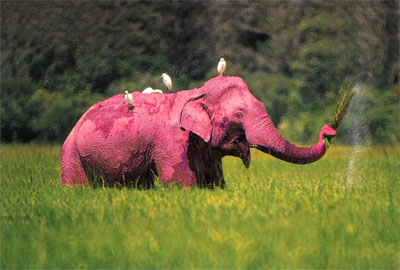
The Pink Elephant
(source: http://allpoetry.com/poem/7354667-The_Pink_Elephant-by-teamblake)
It was the pink elephant Just standing in the middle of the living room Waiting to get noticed Hoping to one day be the topic of conversation 
Some days I swear it had polka dots Other days It just blended into the background of the kitchen walls 
We all knew it was there But didn’t know how to approach it So we tiptoed around Hoping not to disturb its slumber 
The thought of truth being spoken Ignited flames to my throat Choking me At the sight of honesty’s release 
Images of dark blue Ripe purple and a burden of black Reminders Covering my chest and back 
A reminder of my differences And keeper of my secrets 
It’s the slurs Thick with hate Thrown across class rooms Bouncing off walls like rubber balls high off caffeine 
Scars so deep Dignity is nowhere to be found Barbie’s host their non-fat fraps with extra whip Whispering 
of sissies and dykes who roam hopelessly With their elephants in tow Their whispers so loud 
They course through the shallow halls Kicked up and passed around By the football team And slammed into the shadows 
The pink elephant It follows me everywhere
It’s kept on a leash Like the secrets resting on the tip of our tongues 
Waiting, waiting to one day 
slip free

In Focus: The Queue

by Lawrence Mainja, Zimbabwe
source: http://www.voicesnet.org/displayonepoem.aspx?poemid=155879


In the queue, sweat drippingTumies rumbling and
The sun’s rage scotching bald heads
Hoping faces just glance
To the wavering horizon
Spitting out grief
This act, like inborn
Draws us to this place
And the question:
Where we are? 
Waiting
Trees are transpirating
Maybe one coughs
Yet we rub our brows and wait
Not forgetting the persona non grata
Heads we nod, and sovereignty we cherish
What lustre these words have
The fuhrer spits venoms
Hands, hoes, spades are torn, clapping
Knowing tomorrow is the queue
In telepathy we agree
That order and power
Endowed with god’s grace
Is to be left wriggling
Till we all shrink

In Focus: War


Leaping the Peace
We are the Peace-keepers
Who walk in desert lands,
We are the Army’s friendly face,
Machine guns in our hands.

We walk the wilderness
Where others fear to tread
In a mine-infested city
Populated by the dead.

We’ve been programmed to destroy
We’re itching for the kill
So whilst we’re winning hearts and minds
The hunger lingers still.

When politicians wash their hands
Of torture and of shame
When lethal weapons blow you up
Then we’re the ones you blame.

We are all the young men
And women you despise
Who bear the guilt of nations
In the bleakness of our eyes.

And when in uniform display
Our coffins high are borne,
We are your sacrifice
Your slaughtered lambs come home.


by Lynne Colgrave, UK


Source: http://www.voicesnet.org/displayonepoem.aspx?poemid=193746

In Focus: Malaysian Poet, Wong Phui Nam


These are further examples of both form, style and content. To date, Wong Phui Nam remains a favourite poet of mine. His style, in my opinion, especially his description of the landscape carries such love that can only be compared to one of the earliest Indian poets to write in English - Rabindranath Tagore.
HOW THE HILLS ARE DISTANT
Even the film-makers will have to admit,
the Malay annals upon the people’s consciousness
would wash like the tide
piling jetsam upon the jetty steps,
you said, as the car hit
ninety, beetling into the obsessive shell
of a parched landscape. And K.L. hours behind.
Dodging the disappearances and appearances
of the road, the cradled ego growing blind
against the body’s chafing would hide
from the terrible squashing of the sun,
threshing in daydream played out in the street…
of the Capitan China, the one
who, befogged in private vision,
laid down his law and had his women,
drove through the town in his carriage and eight –
for our forefathers left much behind
bringing mostly, when they came, the body
to contend with, did not notice the landscape,
the nodding vacuity of a malformed head.

At year’s end, the sense of annunciation touched only
the windows of the solitary.
And at the garden party, the bishop,
between meeting the community’s leaders,
picked at his beard, thinking perhaps of his study,
colonnades… the cathedral town…
The Capitan’s horses go clip-clop,
passing like the breeze down the midnight streets.

Our conversation petering out… silences…
Daydreams settle into laterite and gibberish of vegetation,
which made nonsense of Saint Francis’ mission.
De Sequiera’s troops over the ridge
forgot the meaning of their Christ and King.
Under the flare of the sun’s declension
the hills ignited. We passed the region
of the dead, the circular descent of those
who died and had committed nothing.

Our room’s on the second floor.
I am rather tired after today;
I feel the darkness of Babylon at the door.

NOCTURNES AND BAGATELLES
The river grows harsh at the bend,
speech broken onto boulders, tears at root-ends
of strong reeds. A lizard moves 
and crawls in the mimosa 
which spread and trail leafless 
across the rough stones of my heart.  
This is not the season 
when the wind blows wet 
and in the night rumours of water fowl 
but of the lonely sun 
when anger withers on the stoney bank, 
its branches bare
against the sky that holds your absence.


by Wong Phui Nam


**Read more about Wong Phui Nam here